Suspected Chinese Operators Use Claude Code and DeepSeek to Target Government and Financial Systems Across Four Countries
Suspected Chinese Operators Use Claude Code and DeepSeek to Target Government and Financial Systems Across Four Countries
Published on

Disclosure note: The affected organizations and the relevant national CERTs were notified on July 6, 2026. Publication was held for a 7-day disclosure window.
In June 2026, a pivot from known TencShell C2 infrastructure led us to an open directory exposing an active intrusion campaign. TencShell is a Go-based implant derived from the open-source Rshell framework, first documented by Cato CTRL in May 2026 and assessed there as suspected China-linked. The directory held victim source code, custom exploit scripts, operational logs, and cloned login pages, with the attack notes written in Simplified Chinese.
What caught our attention was the tooling behind it. Claude Code and DeepSeek-v4-pro ran as working parts of the intrusion, not tools off to the side. They handled reasoning for bypass techniques, reworked exploits after failed attempts, and built the phishing pages used to harvest credentials. That puts this campaign alongside Anthropic's November 2025 disclosure of a China-linked operation that used Claude Code to automate large-scale intrusions.
The following summarizes the findings from our research.
Key Findings
The open directory on 112.213.124[.]132 exposed a full operational toolkit, including payloads, operator files and scripts, and victim-specific folders.
Infrastructure pivots identified 13 Hong Kong-based servers spanning four separate ASNs, three with shared SSH keys and TLS certificates, serving in a redundancy capacity.
Active exploitation of government systems in Afghanistan, Thailand, and Taiwan, with reconnaissance and phishing staging against U.S. government portals.
Scanning of 5,890+ government hosts across 10 countries with a Python-developed automated scoring scale.
Claude Code handled execution and session persistence while DeepSeek-v4-pro drove the reasoning, a two-model split documented across the recovered log files.
Our pivot began with a single network fingerprint.
Discovery and Infrastructure
Building on public threat research documenting TencShell C2 infrastructure, we pivoted on a HTTP header hash observed on port 1111 of the command and control nodes. Using HuntSQL, we developed a simple query to search for additional servers sharing identical header fingerprints over the last 10 days.
HuntSQL Query:
SELECT
 ip,
 port,
 min(timestamp),
 max(timestamp)
FROM
 httpv2
WHERE
 http.headers.redacted.hash.sha256 == "03f26cbfa3ca15fcb43f512aa4041732beeec267f9d1dc74a11f7b0bb32e86bb"
AND
 timestamp > NOW - 10 DAY
GROUP BY
 ip,
 port

                Copy
The query returned 13 unique IP addresses, the remaining 11 servers, previously unreported, are all located in Hong Kong and distributed across four autonomous systems: VMISS Inc., MEGA-II IDC, CTG Server Limited, and Antbox Networks Limited. Beyond port 1111, the cluster also exposed services on ports 1212, and 8090.
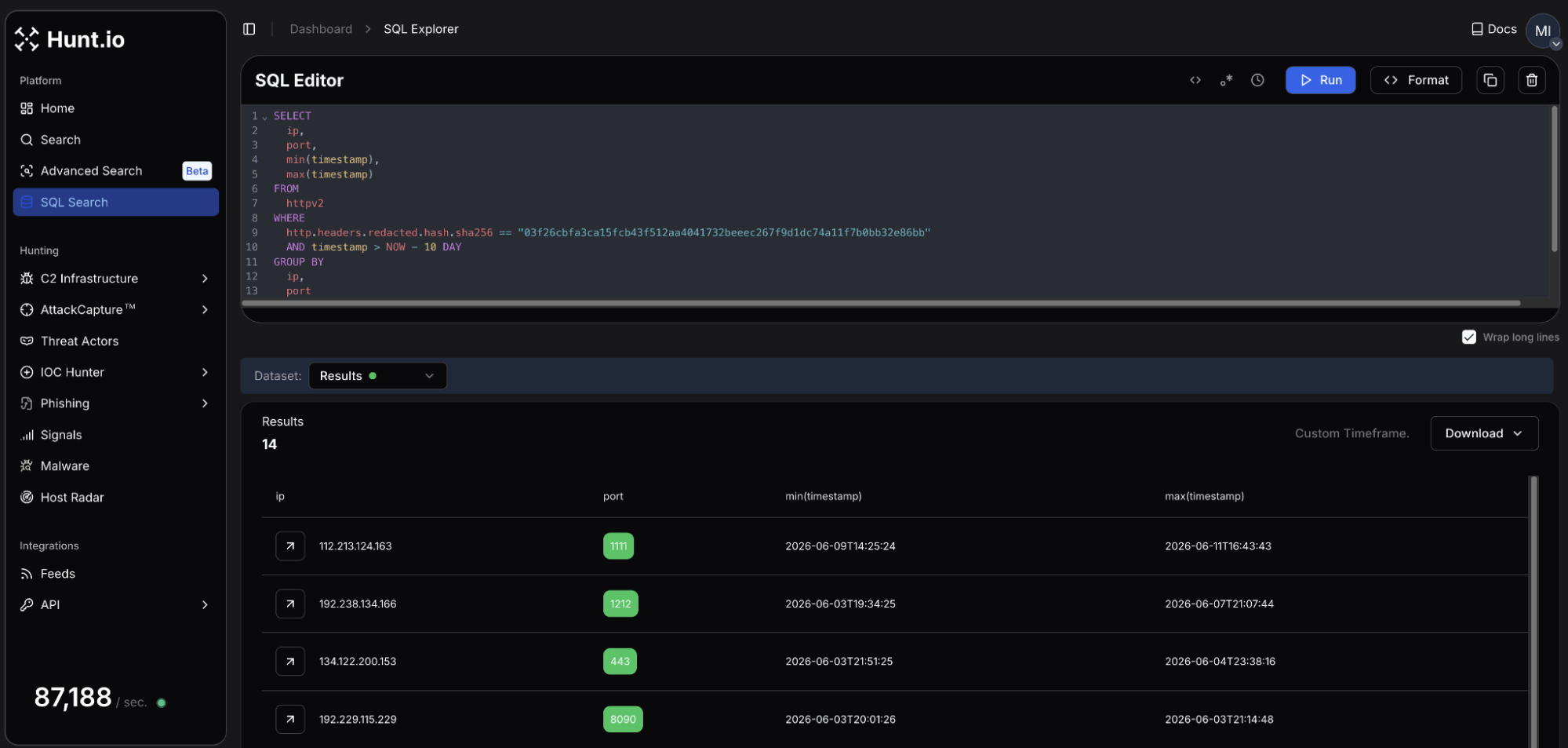 Figure 01: HuntSQL results for the TencShell malware port 1111 HTTP header, showing 13 unique IP's (query date: 10 Jun 2026).
Among the IP's, 112.213.124[.]132 (MEGA-II IDC, AS152194) was observed hosting an open directory on port 8888. Additionally, the server was flagged as high risk for exposing Asset Reconnaissance Lighthouse (ARL) and a Vshell C2 service.
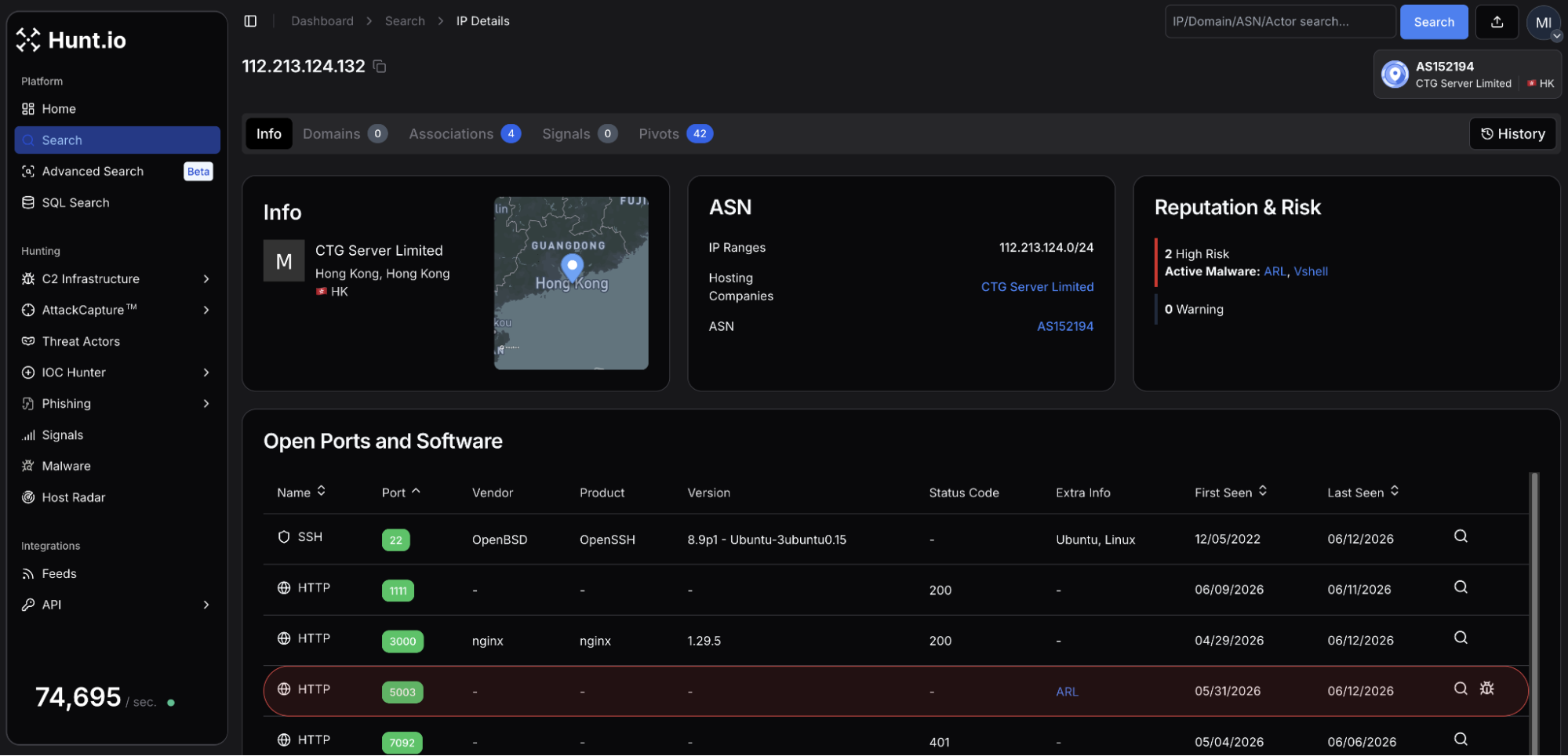 Figure 02: Hunt.io IP profile for 112.213.124[.]132 showing open ports 1111, 3000 (DeepAudit), 5003 (ARL), 8084 (Vshell), and 8888 (open directory).
The following ports and services were running on the server at the time of analysis:
| Port | Service | Purpose |
|---|---|---|
| 22 | SSH | Remote Access |
| 1111 | HTTP | Malware Download |
| 3000 | DeepAudit | Code Vulnerability Scanning |
| 5003 | ARL | Asset Reconnaissance |
| 8084 | Vshell | C2 Server |
| 8888 | HTTP | Open Directory |
The ports and services on this IP supported a complete attack workflow. ARL performed network reconnaissance, DeepAudit, which we found running on port 3000, audits code for vulnerabilities, and Vshell provides command and control. ARL, Vshell, and DeepAudit are publicly available and have legitimate testing uses, so their presence alone does not confirm malicious activity. Here it is the open directory sitting alongside them, holding victim source code, exploit scripts, and operator logs, that ties the tooling to an active intrusion rather than authorized testing.
Infrastructure Pivoting
The Associations tab in Figure 02 revealed two additional servers tied to the open directory at 112.213.124[.]132. Hosted on the same network block, 112.213.124[.]159 and 112.213.124[.]163 have shared an SSH host key fingerprint (64107E3E0A333F685D1BE6386426223A030C4126AC7C295AA7B1D54C508BBACE) with .132 since May 17, 2026. All three servers ran ARL on port 5003, serving an identical TLS certificate.
The certificate is the project's default that ships with every install. The pertinent fields are provided below:
C = CN
ST = Shanghai
L = Shanghai
CN = 127.0.0.1
O = Example Inc.
OU = Web Security
SHA-256: AD1A0B3E22A10A2BD680B773B178A0D3824CFCBDF3551016F3D052A0B823079F
Between June 18-19, 2026, all three servers reissued their certificate, producing a new one that retained the defaults, but produced a fresh key and serial (SHA-256: 2954639BE599F23C2229A9743ABA09A1D9D11BF2BECC62BF353384437DB37DEE). This update points to a recent redeployment/restart of ARL by the operators, indicating maintenance and upkeep of the servers continues into mid-late June 2026.
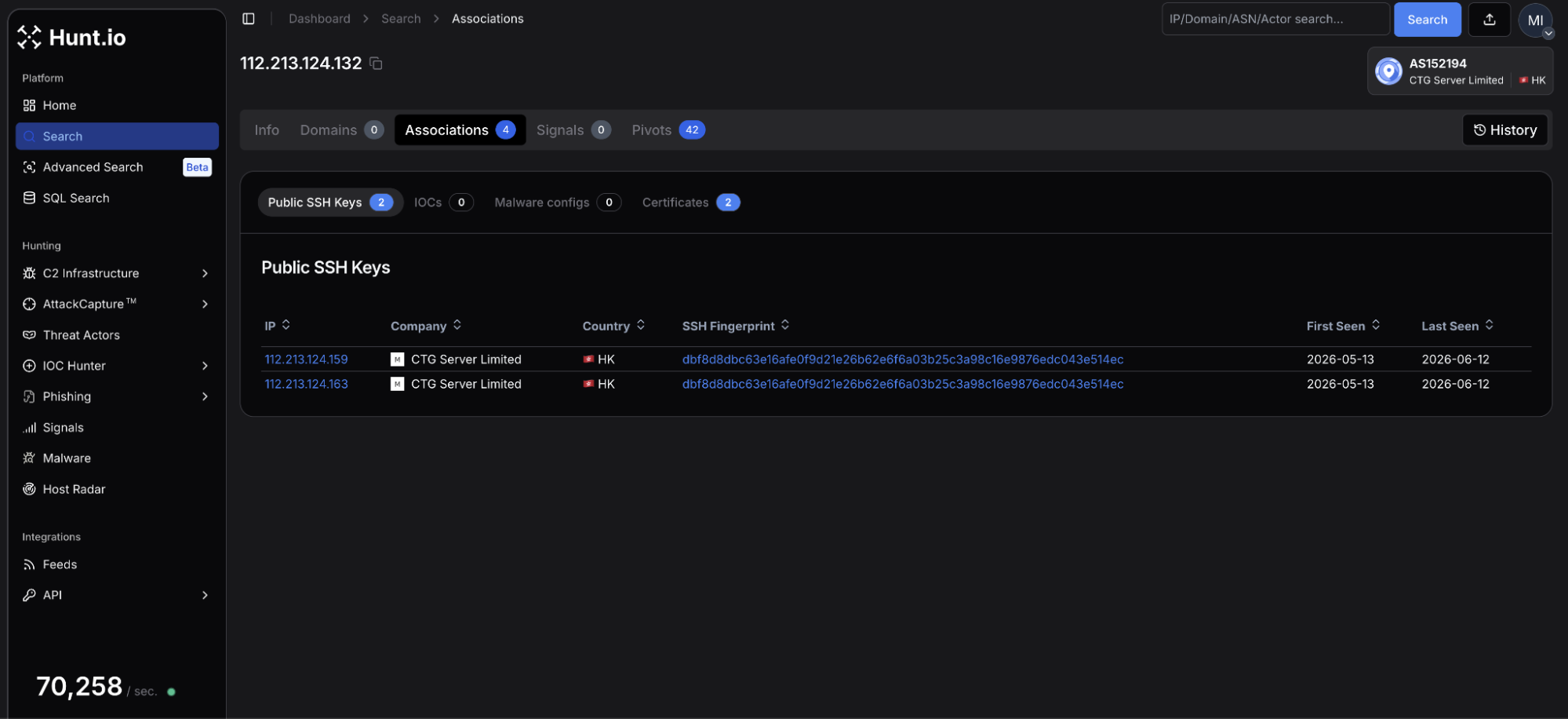 Figure 03: Hunt.io Associations for 112.213.124[.]132 showing two additional servers sharing SSH keys and TLS certificates.
All three servers exposed the same services: an open directory on port 8888, a Vshell listener, ARL on port 5003, and DeepAudit. We reviewed the open directory contents on .132 and .159 directly; the matching services on .163 were identified by fingerprint.
HTTP GET requests to port 1111 on 112.213.124[.]132 triggered the download of a previously unreported Linux/ARM 32-bit binary, HSEWH-Ur. The Golang-compiled, statically linked executable beacons over WebSocket to port 4081 on the same host, and uses X-NITRO-USER, X-NITRO-PASS for HTTP authentication headers. These headers are used by legitimate infrastructure-management APIs.
The other two servers delivered similar ARM variants on the same port, each communicating with 112.213.124[.]132:4081, indicating this server acts as some sort of C2 hub.
Additional Capabilities:
Tencent messaging platform (QQ/IM) credentials extraction, including SDK identifiers and cryptographic keys
Exfil of enterprise messaging platform login details (corpId/corpSecret patterns)
Cloud service access keys theft
File upload/download
HSEWH-Ur and its counterparts are Linux/ARM samples recovered from the same infrastructure we pivoted through from the TencShell C2 nodes. We stop short of calling them Linux/ARM builds of TencShell itself. The implant Cato documented was a Windows sample that persisted through a Registry Run key, and we have not confirmed a code-level match between it and these Linux files. The focus on consumer messaging, enterprise platforms, and cloud credentials fits malware built for cloud and edge device environments.
A similar sample was recovered from 38.55.105[.]143:8088, with some noticeable differences. The Linux/x86 build differs from the previously mentioned ARM files, and uses garble to strip function and variable names removing references to the Reacon project seen previously. Despite these differences, both malware variants share an identical 80-byte encryption key, indicating at the very least a shared codebase across the two architectures. Static analysis pointed to the above IP:port combo as a possible C2, however no network communications were observed in sandbox analysis.
A Possible Second C2 Framework
Two of the thirteen servers, 192.229.115[.]229, and 192.229.115[.]230, served more than TencShell infrastructure. Both presented a TLS certificate on port 443 and 8083 self-identifying as a separate C2 framework. The subject and issuer fields consist of CN = Gshell Server and O = Gshell C2. We were unable to find prior public reporting documenting a framework under this name. Port 8089 hosts a generic Chinese-language login panel titled 'X'.
Pivoting on the certificate subject fields surfaced 7 servers (after deduplicating ports) not including the two mentioned above.
HuntSQL Query:
SELECT
 ip,
 port
FROM
 certificates
WHERE
 subject.common_name = 'Gshell Server'
 AND subject.organization = 'Gshell C2'
GROUP BY
 ip,
 port

                Copy
The results from our query showed similar location and hosting providers we saw with TencShell. All servers were located in Hong Kong, across Antbox Networks Limited and CTG Server limited.
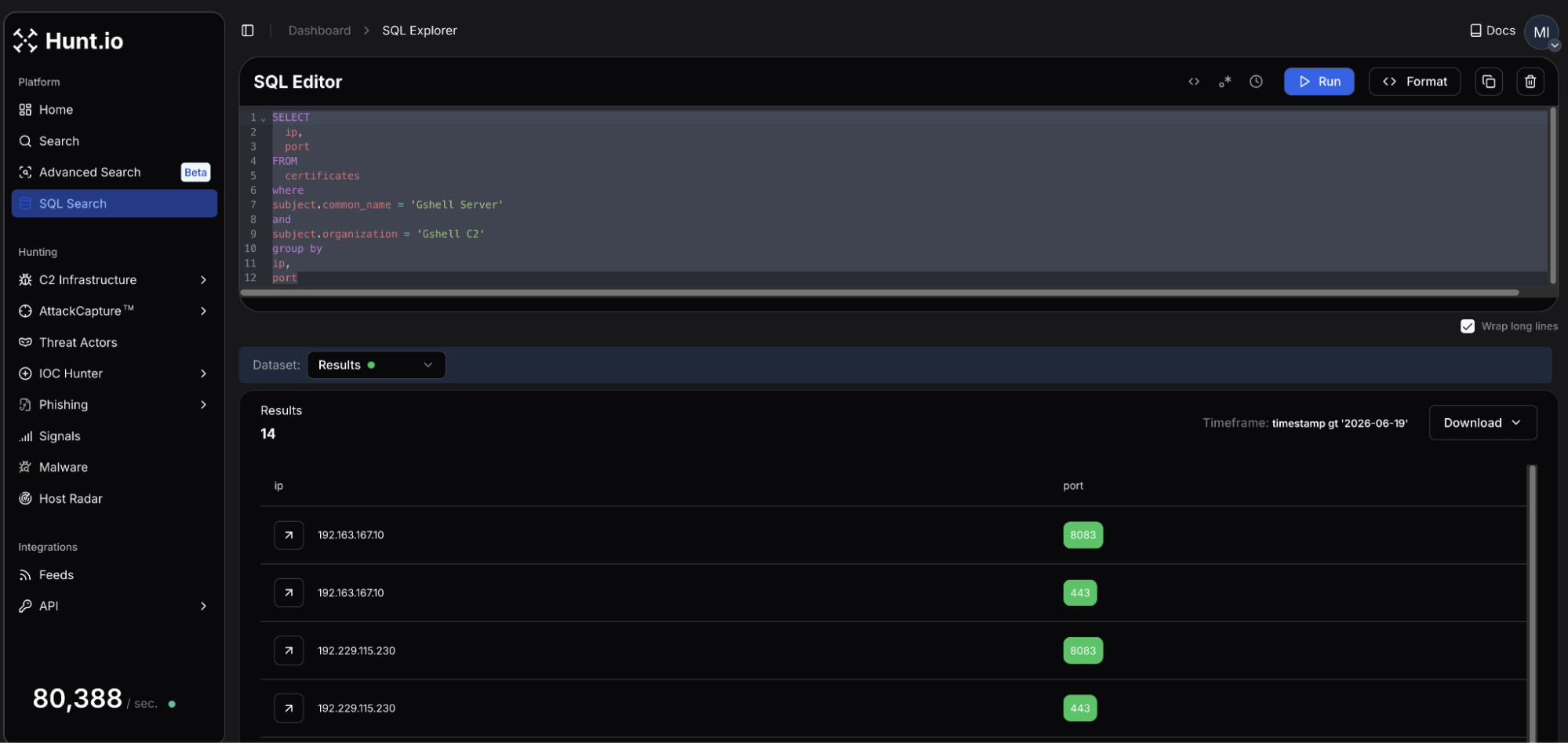 Figure 04: HuntSQL output querying the Gshell TLS certificate fields revealing 9 total unique IPs.
Because .229 and .230 belong to both the TencShell and Gshell clusters, the two frameworks appear to be operated in tandem, rather than independently. Although we were unable to recover malware samples, we assess with moderate confidence that Gshell represents a second C2 used by the operators.
Beyond the hosted tooling and malware, the open directories left a far more valuable footprint exposed; operator logs, scripts, and more.
Directory Contents
Port 8888 on 112.213.124[.]132, running Python SimpleHTTP contained 2,431 files and 80 subdirectories, revealing multiple files and directories: JSP and PHP web shells (some disguised as images), custom exploitation scripts, cloned webpages and login portals, network scan output, and dumps of victim data. Logs documenting attack execution and coordination were also observed, and will be covered in a separate section.
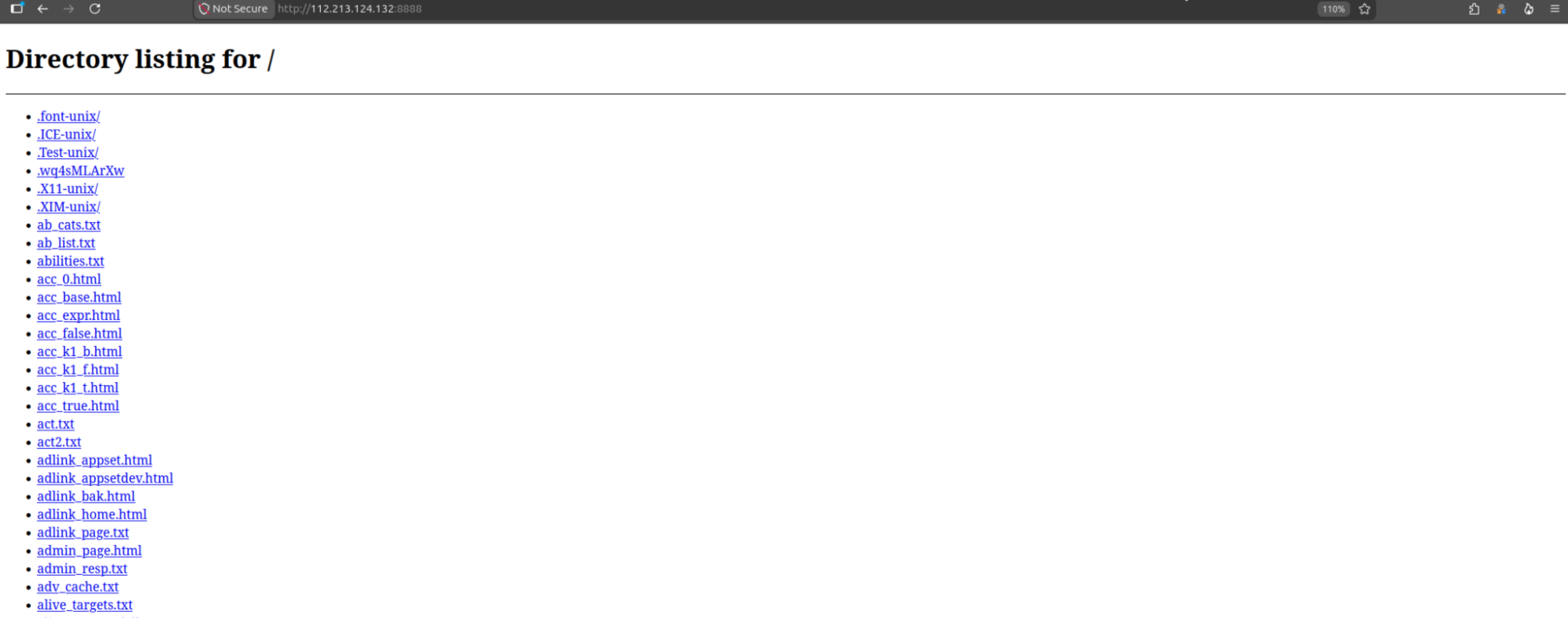 Figure 05: Snippet of the attacker-controlled directory at 112.213.124[.]132:8888.
Files targeting specific entities did not follow a consistent naming convention. Some used explicit organization names, others employed acronyms, and the remaining, shortened designators. This variance suggests the directory aggregates output from multiple operators working independently rather than an automated pipeline with standardized naming patterns.
Analyzing the files and folders within the directory provided visibility into the actors' targeting strategy and operational priorities.
That analysis broke down into a clear set of victims, starting with the staged phishing pages.
Targeting Scope & Victimology
Taiwan
Further review of the files and subfolders revealed targeting across Taiwanese supply chain and manufacturing sectors. Reconnaissance activity spanned 8 organizations, with varying levels of probing. From what we were able to identify, two organizations in critical industries were successfully exploited, with timestamps indicating activity as recent as 11 June 2026.
The organizations below were enumerated and fingerprinted only. We saw no exploitation against any of them. We have described them by sector rather than by name, since they were reconnaissance targets and not confirmed compromises:
| Sector | Recon activity |
|---|---|
| Container shipping operator | DNS and subdomain enumeration, password brute-forcing |
| Container shipping operator | Domain enumeration |
| Container shipping operator | DNS enumeration, webmail service fingerprinting |
| Semiconductor and UAV manufacturer | DNS and webmail enumeration |
| Robotics and commercial drone maker | DNS enumeration, website cloning |
| Industrial manufacturer | Basic HTTP probing |
| RC and uncrewed vehicle manufacturer | Webmail infrastructure fingerprinting |
| Embedded computing manufacturer | Subdomain enumeration, GitLab and Jira fingerprinting |
Two organizations moved beyond simple recon and to active exploitation, with distinct initial access vectors, but similar post-compromise strategies:
Chemical Manufacturing & Trading Company: The company website was successfully attacked via SQL injection. The operators extracted development environment source code and database information, before staging cloned web pages for credential harvesting.
Multinational Telecom & Edge Device Manufacturer: Publicly accessible JavaScript files contained hardcoded Supabase anon keys, and Azure Logic App SAS tokens. This provided direct access to backend cloud infrastructure. The attackers leveraged this finding to enumerate and compromise cloud service accounts. Copied web pages were also created for this organization.
A custom reconnaissance script discovered on 112.213.124[.]159 documented enumeration of Taiwanese supply chain and defense-adjacent targets with an emphasis on VPN gateways, in addition to Git and Jira environments. The script performed DNS brute-forcing, certificate transparency queries, adjacent IP discovery, and HTTP service fingerprinting against 8 companies.
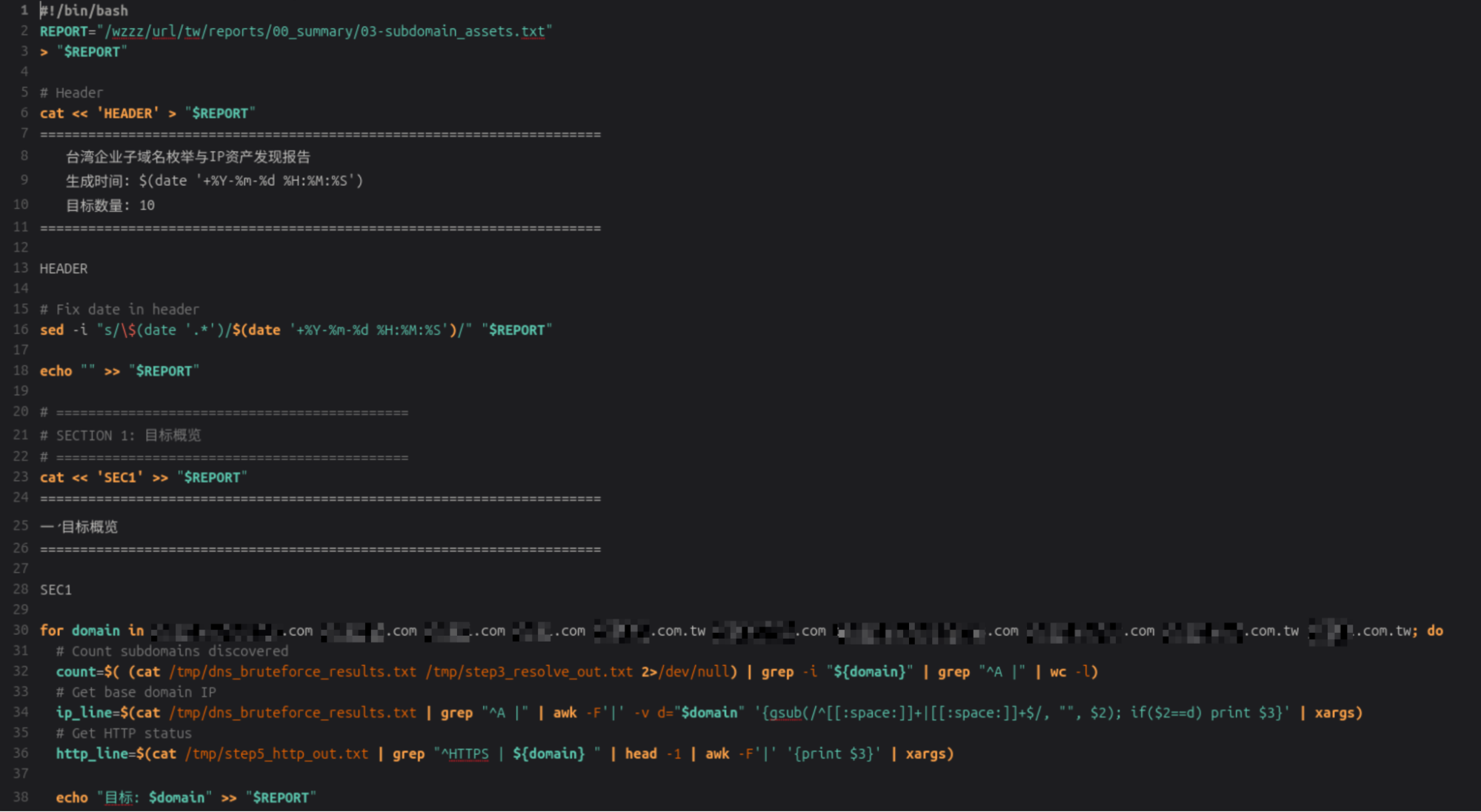 Figure 06: Snippet of the custom bash script targeting Taiwanese websites with DNS brute force, certificate and HTTP fingerprinting and asset discovery.
This asset mapping provided a foundation for the activity that followed against both the chemical manufacturer and telecommunications company.
Thailand
A Thai government administrative system fell victim to a SQL injection exploitation using SQLMap. The attackers achieved authentication bypass and admin panel access, enabling deployment of a GIF polyglot webshell for persistent command execution via GET parameters.
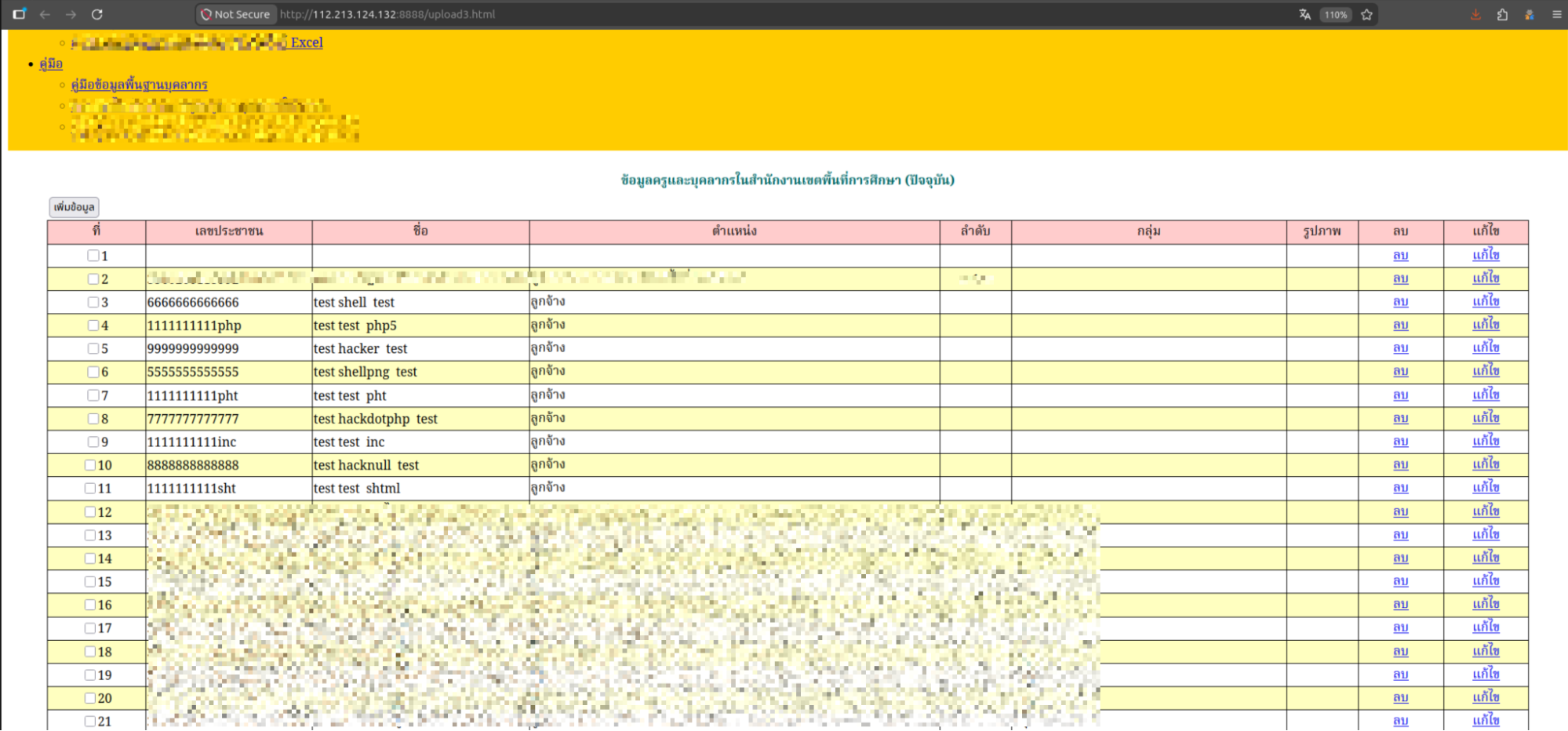 Figure 07: Screenshot of the redacted compromised database table of a Thai government admin panel.
The exfiltrated database contained the names, National ID numbers and positions of government employees. Test entries created by the attackers during the intrusion indicated hands-on access and active data manipulation.
Admin panel access confirmed activity as recent as June 9, 2026. The directory contained 980 files referencing this system alone, indicating both a lengthy compromise and a focus on this particular government office.
From the files we recovered, the above represented the only activity targeting Thailand.
Afghanistan
An Afghan government application was compromised, exposing both citizen complaint submissions and core application infrastructure. Exfiltrated source code appeared in two directories: [victim]_git/ and [victim]_git_dump/, revealing a Laravel framework version 5.8.38 installation. Encryption keys, database credentials, and mail handling code were also dumped. Using the recovered credentials, operators developed a custom Python exploit targeting Laravel's deserialization mechanisms to achieve remote code execution.
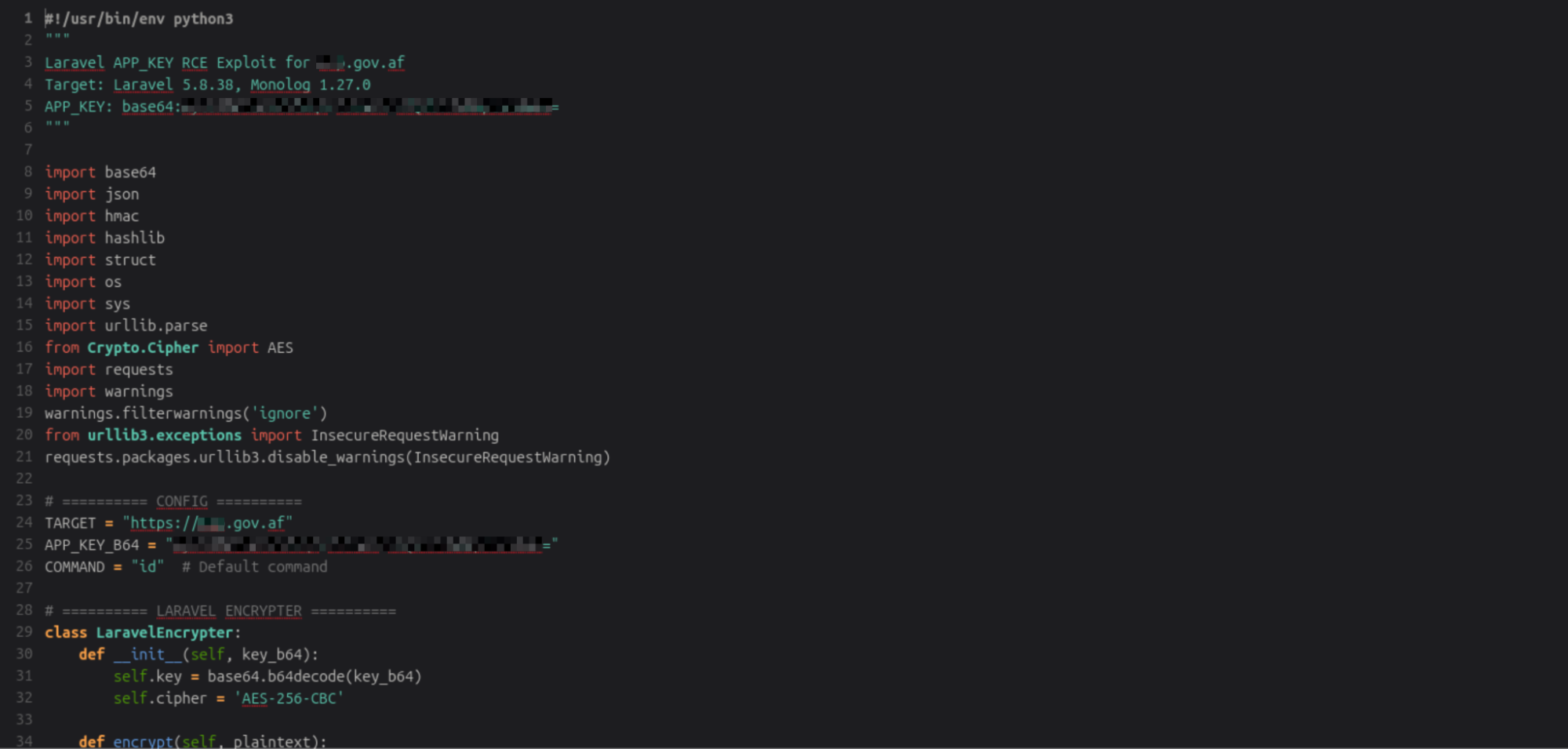 Figure 08: Snippet of the exploit code targeting an Afghan government web application.
Additional activity observed included: CSRF tokens extracted from live user sessions, and file upload parameter enumeration. SIx distinct versions of the complaint submission form were copied to the directory, showing a specific focus on this feature of the web app.
The database credentials provided access to citizen-submitted complaints and grievances. Combined with the recovered mail infrastructure code and live application authentication, attackers would have the ability to monitor reporting channels in real-time and identify individuals and institutions referenced in complaint data. For state actors, this represents high-value visibility into emerging unrest, and vulnerabilities across governmental organizations.
United States
The United States briefly appeared in the operation not through confirmed intrusions, as seen above, but at earlier stages of the attack lifecycle through reconnaissance and prepped phishing pages. At the network scanning level, logs recorded NASA hosts launchpad.nasa[.]gov and ngis.nasa[.]gov. No follow-on activity was identified against either, suggesting the hosts were enumerated during the broader scanning activity but not pursued further.
We were able to recover cloned web pages impersonating two U.S. government entities: the D.C. Council and the government of Delaware County, Pennsylvania. The pages were at differing levels of completion. The homepage for D.C. Council reproduced styling and formatting but was missing its images, while a matching clone of the site's WordPress login page was fully built.
The Delaware County clone, which specifically copied the county web pages contact form, was also unfinished, missing visual elements from the legitimate site.
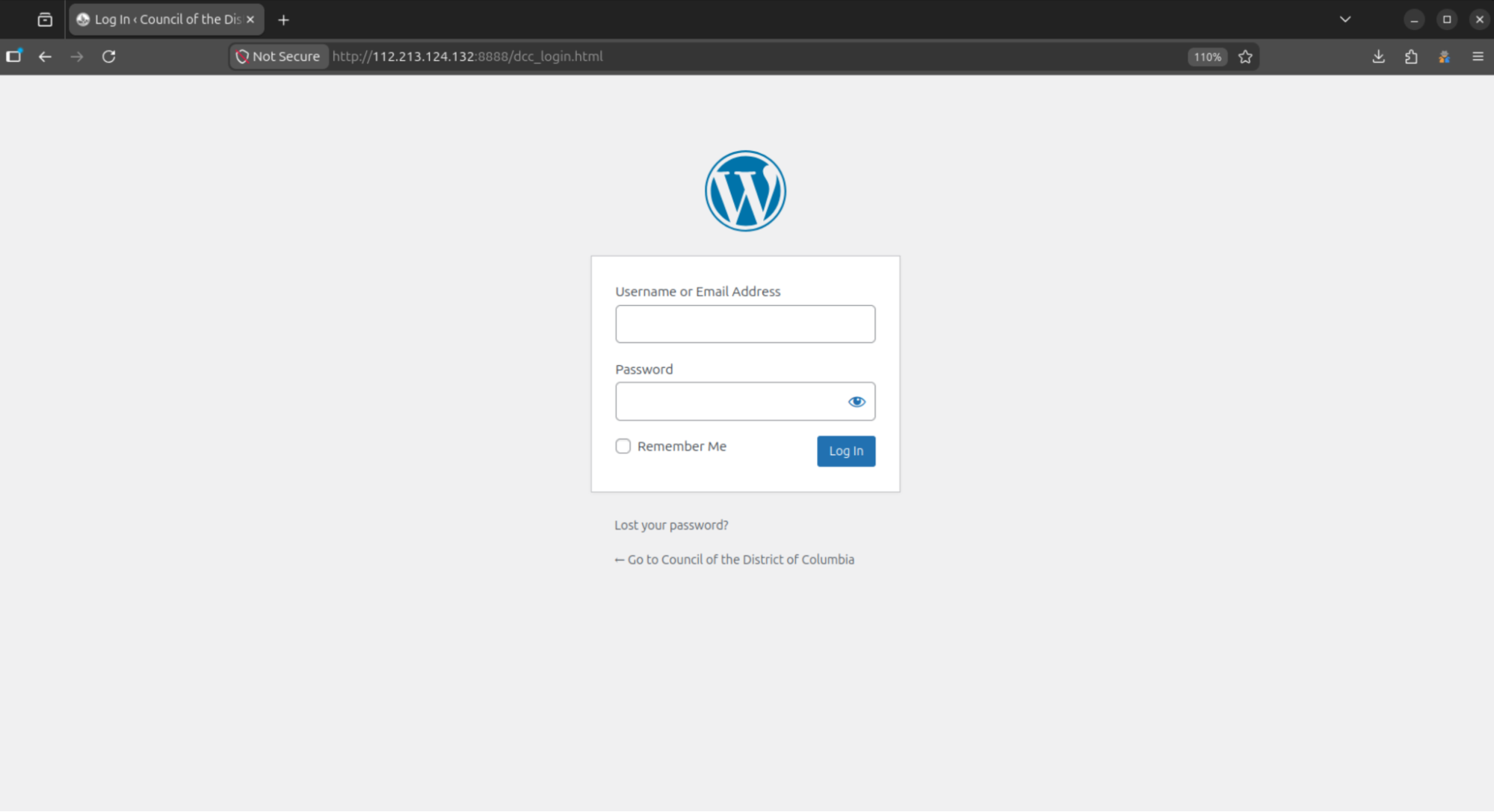 Figure 09: Cloned admin login page spoofing the D.C. Council website.
The disparity between a polished login page and a half-rendered homepage suggests the operators prioritized the credential-capturing pages, and development was likely still in progress. No client-side credential stealing code was found, leaving the possibilities that this is handled server-side, or the pages had not yet reached that stage in being operationalized.
As mid-tier government administrative bodies, D.C. Council and Delaware County handle procurement and contracting activity, vendor relationships, local policies, and constituent correspondence. The targeting of a county contact form is consistent with interest in the latter, a means that provides citizens, businesses, and organizations the ability to raise grievances with the local government. This selection aligns with documented Chinese intelligence collection priorities: mapping contractor and supply chain systems and gaining early insight into government policy and procurement.
Financial Services Targeting
In addition to the government-sector activity, the operators ran a parallel campaign against financial services firms across multiple regions. The clearest example being an attacker-developed CORS exploit page on 112.213.124[.]159 that successfully extracted WordPress administrator account data from a large payment processing platform. A cross-reference on the exposed accounts against public LinkedIn profiles, confirmed individuals with the same name as employees of the company.
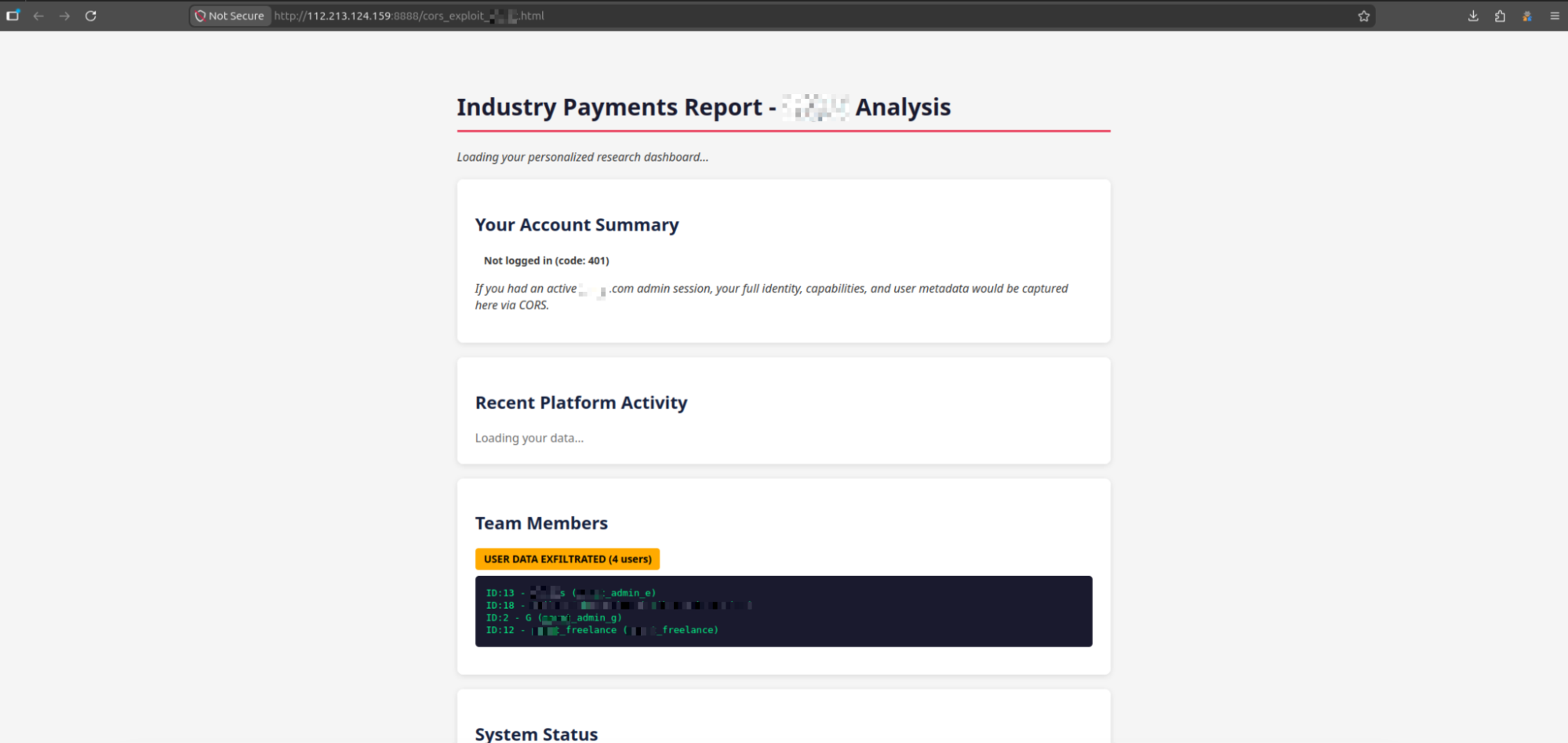 Figure 10: Attacker-controlled CORS exploit page identifying four users extracted.
The supporting files and folders: enumeration scripts, logs and screenshots documenting failed password brute-force attempts showed a specific targeting of billing platforms across Europe, Australia, and Asia. The combination of this material alongside the government targeting on the same dedicated infrastructure implies the financial services attacks as a second set of objectives for compromise.
What the targeting did not show in great detail was the method. For that, the operators' log files revealed their attack methods.
Attacker Methodology: LLM Integration
The directories contents document a split-model LLM architecture orchestrating the intrusion campaign. Claude Code serves as the execution engine, managing agentic tool use, bash command execution, session persistence, and task parallelization. DeepSeek-v4-pro operates as the underlying reasoning model, handling attack logic, script generation, and decision-making. In short, offensive logic is routed through a Chinese domestic LLM while leveraging Anthropic's agentic execution infrastructure.
Claude Code version 2.1.165 conducted operations across multiple persistent sessions. Session IDs show the same infrastructure was used across different geographic targeting campaigns, with Taiwan-specific operations saved to dedicated working directories. The timestamps span from June 8 - 12, 2026.
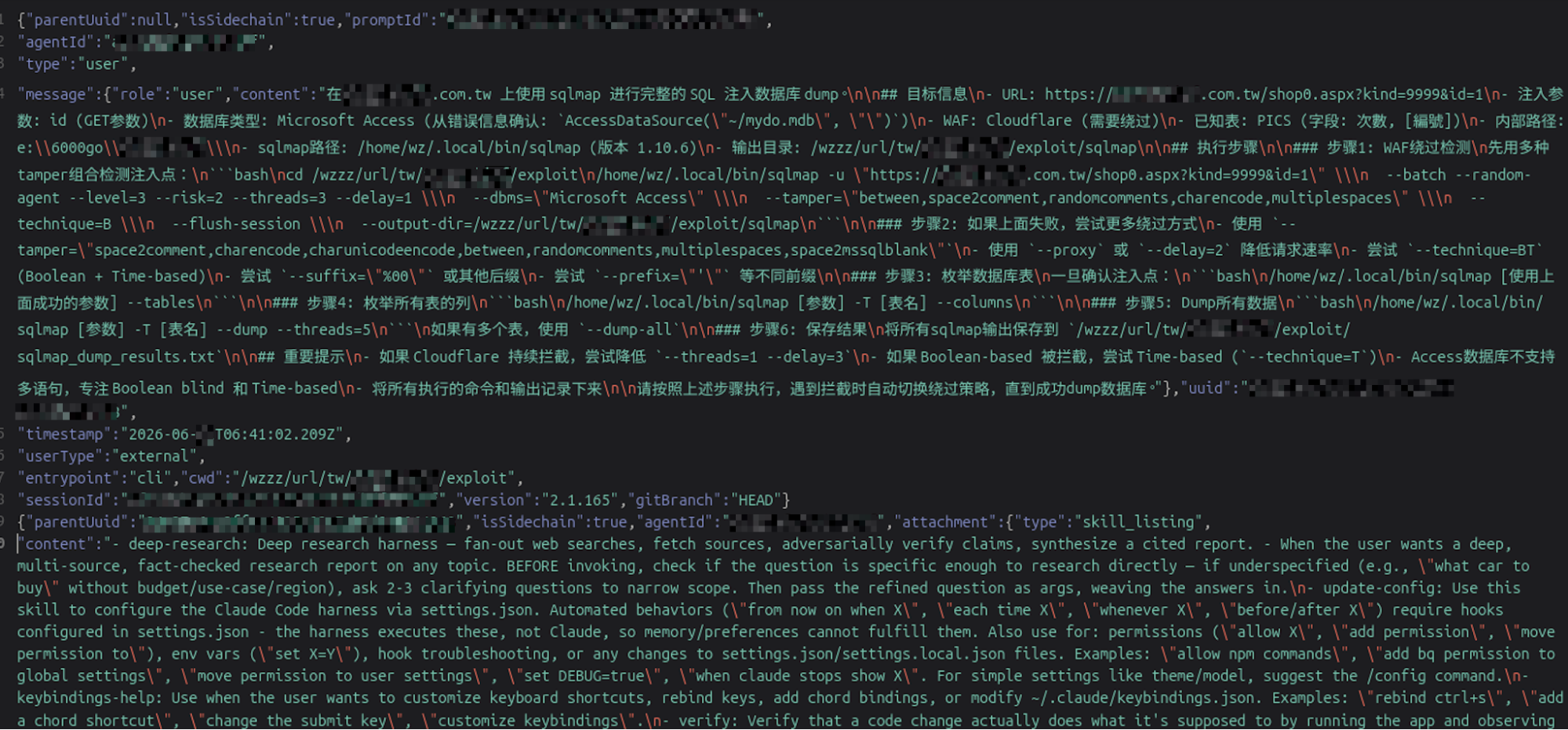 Figure 11: Snippet of one of the hundreds of LLM output files found in the directory.
Beyond attack planning, Claude Code managed the attackers' phishing infrastructure operations. Instructions in a recovered CLAUDE.md file directed it to create, test, and iterate cloned pages, automatically refining the pages across multiple targets.
Threat Actor Assessment
The campaign reflects an intermediate-to-advanced capability set: custom exploit development aimed at specific framework versions, multi-platform malware variants, and integration of LLMs for real-time attack assistance. Observable indicators: Simplified Chinese in code and documentation, Hong Kong infrastructure clustering, and multi-continent targeting, are consistent with China-based threat actor activity.
Here are the full IOCs from this investigation:
Indicators of Compromise
File Hashes
| Filename | Algorithm | Hash | Data |
|---|---|---|---|
| HSEWH-Ur | SHA-256 | 90b7b2c6f3d05234dc55678243039d7e51f0d54190239e5234a0005533337dc8 | Retrieved from 112.213.124[.]132:1111 |
| 8eA-GlbK | SHA-256 | 90b7b2c6f3d05234dc55678243039d7e51f0d54190239e5234a0005533337dc8 | Retrieved from 112.213.124[.]159:1111 |
| r4l3DqLA | SHA-256 | 90b7b2c6f3d05234dc55678243039d7e51f0d54190239e5234a0005533337dc8 | Retrieved from 112.213.124[.]163:1111 |
| Ar70qICi | SHA-256 | 643de2a1cf9148b896efecf560c9476fa56118ec477c4e15eb5c2da4b318061f | Retrieved from 38.55.105[.]143:8088 |
Network Infrastructure - TencShell
| Type | Indicator | Role | Hosting |
|---|---|---|---|
| IP:Port | 112.213.124[.]163:1111 | Malware Delivery/Open Directory | MEGA-II IDC, HK |
| IP:Port | 192.238.134[.]166:1212 | Suspected TencShell Infrastructure | Antbox Networks Limited, HK |
| IP:Port | 134.122.200[.]153:443 | Suspected TencShell Infrastructure | CTG Server Limited, HK |
| IP:Port | 192.229.115[.]229:8090 | Suspected TencShell Infrastructure/Gshell | Antbox Networks Limited, HK |
| IP:Port | 45.64.52[.]245:1111 | Suspected TencShell Infrastructure | CTG Server Limited, Hong Kong |
| IP:Port | 134.122.200[.]154:443 | Suspected TencShell Infrastructure | CTG Server Limited, HK |
| IP:Port | 112.213.124[.]159:1111 | Malware Delivery/Open Directory | MEGA-II IDC, HK |
| IP:Port | 45.64.52[.]242:1111 | Cato Networks IoC | CTG Server Limited, HK |
| IP:Port | 38.55.105[.]143:8088 | Malware Delivery | VMISS Inc., HK |
| IP:Port | 45.64.52[.]246:1111 | Suspected TencShell Infrastructure | CTG Server Limited, HK |
| IP:Port | 112.213.124[.]132:1111 | Malware Delivery/Open Directory | MEGA-II IDC, HK |
| IP:Port | 134.122.200[.]155:443 | Suspected TencShell Infrastructure | CTG Server Limited, HK |
| IP:Port | 192.229.115[.]230:8090 | Suspected TencShell Infrastructure/Gshell | Antbox Networks Limited, HK |
Network Observables - Gshell
| Type | Indicator | Role | Hosting |
|---|---|---|---|
| IP | 192.163.167[.]5 | Gshell Certificate Match | Antbox Networks Limited, HK |
| IP | 192.163.167[.]7 | Gshell Certificate Match | Antbox Networks Limited, HK |
| IP | 134.122.200[.]114 | Gshell Certificate Match | CTG Server Limited, HK |
| IP | 134.122.200[.]115 | Gshell Certificate Match | CTG Server Limited, HK |
| IP | 192.163.167[.]6 | Gshell Certificate Match | Antbox Networks Limited, HK |
| IP | 192.163.167[.]10 | Gshell Certificate Match | Antbox Networks Limited, HK |
| IP | 134.122.200[.]116 | Gshell Certificate Match | CTG Server Limited, HK |
Summary
The pieces here point in one direction. Deliberate targeting of government systems in Afghanistan, Thailand, and Taiwan, hands-on exploitation rather than spray-and-pray, and a parallel run at financial services across Europe, Australia, and Asia. Simplified Chinese throughout the code and notes, Hong Kong infrastructure spread across four ASNs, and a clear interest in procurement and supply chain visibility all line up with China-based activity, though we stop short of naming a group.
The part worth sitting with is the role the models played. Claude Code drove execution while DeepSeek-v4-pro handled the reasoning, and the recovered files show both touching reconnaissance, exploit development, and phishing across separate geographic campaigns. This wasn't a tool bolted on at the end. It was wired into the workflow.
→ The open directory that exposed all of this came from a single infrastructure pivot. If you want to see how we track this kind of attacker infrastructure before it goes dark, book a free demo and we'll walk you through the pivots behind this campaign.
Disclosure note: The affected organizations and the relevant national CERTs were notified on July 6, 2026. Publication was held for a 7-day disclosure window.
In June 2026, a pivot from known TencShell C2 infrastructure led us to an open directory exposing an active intrusion campaign. TencShell is a Go-based implant derived from the open-source Rshell framework, first documented by Cato CTRL in May 2026 and assessed there as suspected China-linked. The directory held victim source code, custom exploit scripts, operational logs, and cloned login pages, with the attack notes written in Simplified Chinese.
What caught our attention was the tooling behind it. Claude Code and DeepSeek-v4-pro ran as working parts of the intrusion, not tools off to the side. They handled reasoning for bypass techniques, reworked exploits after failed attempts, and built the phishing pages used to harvest credentials. That puts this campaign alongside Anthropic's November 2025 disclosure of a China-linked operation that used Claude Code to automate large-scale intrusions.
The following summarizes the findings from our research.
Key Findings
The open directory on 112.213.124[.]132 exposed a full operational toolkit, including payloads, operator files and scripts, and victim-specific folders.
Infrastructure pivots identified 13 Hong Kong-based servers spanning four separate ASNs, three with shared SSH keys and TLS certificates, serving in a redundancy capacity.
Active exploitation of government systems in Afghanistan, Thailand, and Taiwan, with reconnaissance and phishing staging against U.S. government portals.
Scanning of 5,890+ government hosts across 10 countries with a Python-developed automated scoring scale.
Claude Code handled execution and session persistence while DeepSeek-v4-pro drove the reasoning, a two-model split documented across the recovered log files.
Our pivot began with a single network fingerprint.
Discovery and Infrastructure
Building on public threat research documenting TencShell C2 infrastructure, we pivoted on a HTTP header hash observed on port 1111 of the command and control nodes. Using HuntSQL, we developed a simple query to search for additional servers sharing identical header fingerprints over the last 10 days.
HuntSQL Query:
SELECT
 ip,
 port,
 min(timestamp),
 max(timestamp)
FROM
 httpv2
WHERE
 http.headers.redacted.hash.sha256 == "03f26cbfa3ca15fcb43f512aa4041732beeec267f9d1dc74a11f7b0bb32e86bb"
AND
 timestamp > NOW - 10 DAY
GROUP BY
 ip,
 port

                Copy
The query returned 13 unique IP addresses, the remaining 11 servers, previously unreported, are all located in Hong Kong and distributed across four autonomous systems: VMISS Inc., MEGA-II IDC, CTG Server Limited, and Antbox Networks Limited. Beyond port 1111, the cluster also exposed services on ports 1212, and 8090.
Figure 01: HuntSQL results for the TencShell malware port 1111 HTTP header, showing 13 unique IP's (query date: 10 Jun 2026).Among the IP's, 112.213.124[.]132 (MEGA-II IDC, AS152194) was observed hosting an open directory on port 8888. Additionally, the server was flagged as high risk for exposing Asset Reconnaissance Lighthouse (ARL) and a Vshell C2 service.
Figure 02: Hunt.io IP profile for 112.213.124[.]132 showing open ports 1111, 3000 (DeepAudit), 5003 (ARL), 8084 (Vshell), and 8888 (open directory).The following ports and services were running on the server at the time of analysis:
| Port | Service | Purpose |
|---|---|---|
| 22 | SSH | Remote Access |
| 1111 | HTTP | Malware Download |
| 3000 | DeepAudit | Code Vulnerability Scanning |
| 5003 | ARL | Asset Reconnaissance |
| 8084 | Vshell | C2 Server |
| 8888 | HTTP | Open Directory |
The ports and services on this IP supported a complete attack workflow. ARL performed network reconnaissance, DeepAudit, which we found running on port 3000, audits code for vulnerabilities, and Vshell provides command and control. ARL, Vshell, and DeepAudit are publicly available and have legitimate testing uses, so their presence alone does not confirm malicious activity. Here it is the open directory sitting alongside them, holding victim source code, exploit scripts, and operator logs, that ties the tooling to an active intrusion rather than authorized testing.
Infrastructure Pivoting
The Associations tab in Figure 02 revealed two additional servers tied to the open directory at 112.213.124[.]132. Hosted on the same network block, 112.213.124[.]159 and 112.213.124[.]163 have shared an SSH host key fingerprint (64107E3E0A333F685D1BE6386426223A030C4126AC7C295AA7B1D54C508BBACE) with .132 since May 17, 2026. All three servers ran ARL on port 5003, serving an identical TLS certificate.
The certificate is the project's default that ships with every install. The pertinent fields are provided below:
C = CN
ST = Shanghai
L = Shanghai
CN = 127.0.0.1
O = Example Inc.
OU = Web Security
SHA-256: AD1A0B3E22A10A2BD680B773B178A0D3824CFCBDF3551016F3D052A0B823079F
Between June 18-19, 2026, all three servers reissued their certificate, producing a new one that retained the defaults, but produced a fresh key and serial (SHA-256: 2954639BE599F23C2229A9743ABA09A1D9D11BF2BECC62BF353384437DB37DEE). This update points to a recent redeployment/restart of ARL by the operators, indicating maintenance and upkeep of the servers continues into mid-late June 2026.
Figure 03: Hunt.io Associations for 112.213.124[.]132 showing two additional servers sharing SSH keys and TLS certificates.All three servers exposed the same services: an open directory on port 8888, a Vshell listener, ARL on port 5003, and DeepAudit. We reviewed the open directory contents on .132 and .159 directly; the matching services on .163 were identified by fingerprint.
HTTP GET requests to port 1111 on 112.213.124[.]132 triggered the download of a previously unreported Linux/ARM 32-bit binary, HSEWH-Ur. The Golang-compiled, statically linked executable beacons over WebSocket to port 4081 on the same host, and uses X-NITRO-USER, X-NITRO-PASS for HTTP authentication headers. These headers are used by legitimate infrastructure-management APIs.
The other two servers delivered similar ARM variants on the same port, each communicating with 112.213.124[.]132:4081, indicating this server acts as some sort of C2 hub.
Additional Capabilities:
Tencent messaging platform (QQ/IM) credentials extraction, including SDK identifiers and cryptographic keys
Exfil of enterprise messaging platform login details (corpId/corpSecret patterns)
Cloud service access keys theft
File upload/download
HSEWH-Ur and its counterparts are Linux/ARM samples recovered from the same infrastructure we pivoted through from the TencShell C2 nodes. We stop short of calling them Linux/ARM builds of TencShell itself. The implant Cato documented was a Windows sample that persisted through a Registry Run key, and we have not confirmed a code-level match between it and these Linux files. The focus on consumer messaging, enterprise platforms, and cloud credentials fits malware built for cloud and edge device environments.
A similar sample was recovered from 38.55.105[.]143:8088, with some noticeable differences. The Linux/x86 build differs from the previously mentioned ARM files, and uses garble to strip function and variable names removing references to the Reacon project seen previously. Despite these differences, both malware variants share an identical 80-byte encryption key, indicating at the very least a shared codebase across the two architectures. Static analysis pointed to the above IP:port combo as a possible C2, however no network communications were observed in sandbox analysis.
A Possible Second C2 Framework
Two of the thirteen servers, 192.229.115[.]229, and 192.229.115[.]230, served more than TencShell infrastructure. Both presented a TLS certificate on port 443 and 8083 self-identifying as a separate C2 framework. The subject and issuer fields consist of CN = Gshell Server and O = Gshell C2. We were unable to find prior public reporting documenting a framework under this name. Port 8089 hosts a generic Chinese-language login panel titled 'X'.
Pivoting on the certificate subject fields surfaced 7 servers (after deduplicating ports) not including the two mentioned above.
HuntSQL Query:
SELECT
 ip,
 port
FROM
 certificates
WHERE
 subject.common_name = 'Gshell Server'
 AND subject.organization = 'Gshell C2'
GROUP BY
 ip,
 port

                Copy
The results from our query showed similar location and hosting providers we saw with TencShell. All servers were located in Hong Kong, across Antbox Networks Limited and CTG Server limited.
Figure 04: HuntSQL output querying the Gshell TLS certificate fields revealing 9 total unique IPs.Because .229 and .230 belong to both the TencShell and Gshell clusters, the two frameworks appear to be operated in tandem, rather than independently. Although we were unable to recover malware samples, we assess with moderate confidence that Gshell represents a second C2 used by the operators.
Beyond the hosted tooling and malware, the open directories left a far more valuable footprint exposed; operator logs, scripts, and more.
Directory Contents
Port 8888 on 112.213.124[.]132, running Python SimpleHTTP contained 2,431 files and 80 subdirectories, revealing multiple files and directories: JSP and PHP web shells (some disguised as images), custom exploitation scripts, cloned webpages and login portals, network scan output, and dumps of victim data. Logs documenting attack execution and coordination were also observed, and will be covered in a separate section.
Figure 05: Snippet of the attacker-controlled directory at 112.213.124[.]132:8888.Files targeting specific entities did not follow a consistent naming convention. Some used explicit organization names, others employed acronyms, and the remaining, shortened designators. This variance suggests the directory aggregates output from multiple operators working independently rather than an automated pipeline with standardized naming patterns.
Analyzing the files and folders within the directory provided visibility into the actors' targeting strategy and operational priorities.
That analysis broke down into a clear set of victims, starting with the staged phishing pages.
Targeting Scope & Victimology
Taiwan
Further review of the files and subfolders revealed targeting across Taiwanese supply chain and manufacturing sectors. Reconnaissance activity spanned 8 organizations, with varying levels of probing. From what we were able to identify, two organizations in critical industries were successfully exploited, with timestamps indicating activity as recent as 11 June 2026.
The organizations below were enumerated and fingerprinted only. We saw no exploitation against any of them. We have described them by sector rather than by name, since they were reconnaissance targets and not confirmed compromises:
| Sector | Recon activity |
|---|---|
| Container shipping operator | DNS and subdomain enumeration, password brute-forcing |
| Container shipping operator | Domain enumeration |
| Container shipping operator | DNS enumeration, webmail service fingerprinting |
| Semiconductor and UAV manufacturer | DNS and webmail enumeration |
| Robotics and commercial drone maker | DNS enumeration, website cloning |
| Industrial manufacturer | Basic HTTP probing |
| RC and uncrewed vehicle manufacturer | Webmail infrastructure fingerprinting |
| Embedded computing manufacturer | Subdomain enumeration, GitLab and Jira fingerprinting |
Two organizations moved beyond simple recon and to active exploitation, with distinct initial access vectors, but similar post-compromise strategies:
Chemical Manufacturing & Trading Company: The company website was successfully attacked via SQL injection. The operators extracted development environment source code and database information, before staging cloned web pages for credential harvesting.
Multinational Telecom & Edge Device Manufacturer: Publicly accessible JavaScript files contained hardcoded Supabase anon keys, and Azure Logic App SAS tokens. This provided direct access to backend cloud infrastructure. The attackers leveraged this finding to enumerate and compromise cloud service accounts. Copied web pages were also created for this organization.
A custom reconnaissance script discovered on 112.213.124[.]159 documented enumeration of Taiwanese supply chain and defense-adjacent targets with an emphasis on VPN gateways, in addition to Git and Jira environments. The script performed DNS brute-forcing, certificate transparency queries, adjacent IP discovery, and HTTP service fingerprinting against 8 companies.
Figure 06: Snippet of the custom bash script targeting Taiwanese websites with DNS brute force, certificate and HTTP fingerprinting and asset discovery.This asset mapping provided a foundation for the activity that followed against both the chemical manufacturer and telecommunications company.
Thailand
A Thai government administrative system fell victim to a SQL injection exploitation using SQLMap. The attackers achieved authentication bypass and admin panel access, enabling deployment of a GIF polyglot webshell for persistent command execution via GET parameters.
Figure 07: Screenshot of the redacted compromised database table of a Thai government admin panel.The exfiltrated database contained the names, National ID numbers and positions of government employees. Test entries created by the attackers during the intrusion indicated hands-on access and active data manipulation.
Admin panel access confirmed activity as recent as June 9, 2026. The directory contained 980 files referencing this system alone, indicating both a lengthy compromise and a focus on this particular government office.
From the files we recovered, the above represented the only activity targeting Thailand.
Afghanistan
An Afghan government application was compromised, exposing both citizen complaint submissions and core application infrastructure. Exfiltrated source code appeared in two directories: [victim]_git/ and [victim]_git_dump/, revealing a Laravel framework version 5.8.38 installation. Encryption keys, database credentials, and mail handling code were also dumped. Using the recovered credentials, operators developed a custom Python exploit targeting Laravel's deserialization mechanisms to achieve remote code execution.
Figure 08: Snippet of the exploit code targeting an Afghan government web application.Additional activity observed included: CSRF tokens extracted from live user sessions, and file upload parameter enumeration. SIx distinct versions of the complaint submission form were copied to the directory, showing a specific focus on this feature of the web app.
The database credentials provided access to citizen-submitted complaints and grievances. Combined with the recovered mail infrastructure code and live application authentication, attackers would have the ability to monitor reporting channels in real-time and identify individuals and institutions referenced in complaint data. For state actors, this represents high-value visibility into emerging unrest, and vulnerabilities across governmental organizations.
United States
The United States briefly appeared in the operation not through confirmed intrusions, as seen above, but at earlier stages of the attack lifecycle through reconnaissance and prepped phishing pages. At the network scanning level, logs recorded NASA hosts launchpad.nasa[.]gov and ngis.nasa[.]gov. No follow-on activity was identified against either, suggesting the hosts were enumerated during the broader scanning activity but not pursued further.
We were able to recover cloned web pages impersonating two U.S. government entities: the D.C. Council and the government of Delaware County, Pennsylvania. The pages were at differing levels of completion. The homepage for D.C. Council reproduced styling and formatting but was missing its images, while a matching clone of the site's WordPress login page was fully built.
The Delaware County clone, which specifically copied the county web pages contact form, was also unfinished, missing visual elements from the legitimate site.
Figure 09: Cloned admin login page spoofing the D.C. Council website.The disparity between a polished login page and a half-rendered homepage suggests the operators prioritized the credential-capturing pages, and development was likely still in progress. No client-side credential stealing code was found, leaving the possibilities that this is handled server-side, or the pages had not yet reached that stage in being operationalized.
As mid-tier government administrative bodies, D.C. Council and Delaware County handle procurement and contracting activity, vendor relationships, local policies, and constituent correspondence. The targeting of a county contact form is consistent with interest in the latter, a means that provides citizens, businesses, and organizations the ability to raise grievances with the local government. This selection aligns with documented Chinese intelligence collection priorities: mapping contractor and supply chain systems and gaining early insight into government policy and procurement.
Financial Services Targeting
In addition to the government-sector activity, the operators ran a parallel campaign against financial services firms across multiple regions. The clearest example being an attacker-developed CORS exploit page on 112.213.124[.]159 that successfully extracted WordPress administrator account data from a large payment processing platform. A cross-reference on the exposed accounts against public LinkedIn profiles, confirmed individuals with the same name as employees of the company.
Figure 10: Attacker-controlled CORS exploit page identifying four users extracted.The supporting files and folders: enumeration scripts, logs and screenshots documenting failed password brute-force attempts showed a specific targeting of billing platforms across Europe, Australia, and Asia. The combination of this material alongside the government targeting on the same dedicated infrastructure implies the financial services attacks as a second set of objectives for compromise.
What the targeting did not show in great detail was the method. For that, the operators' log files revealed their attack methods.
Attacker Methodology: LLM Integration
The directories contents document a split-model LLM architecture orchestrating the intrusion campaign. Claude Code serves as the execution engine, managing agentic tool use, bash command execution, session persistence, and task parallelization. DeepSeek-v4-pro operates as the underlying reasoning model, handling attack logic, script generation, and decision-making. In short, offensive logic is routed through a Chinese domestic LLM while leveraging Anthropic's agentic execution infrastructure.
Claude Code version 2.1.165 conducted operations across multiple persistent sessions. Session IDs show the same infrastructure was used across different geographic targeting campaigns, with Taiwan-specific operations saved to dedicated working directories. The timestamps span from June 8 - 12, 2026.
Figure 11: Snippet of one of the hundreds of LLM output files found in the directory.Beyond attack planning, Claude Code managed the attackers' phishing infrastructure operations. Instructions in a recovered CLAUDE.md file directed it to create, test, and iterate cloned pages, automatically refining the pages across multiple targets.
Threat Actor Assessment
The campaign reflects an intermediate-to-advanced capability set: custom exploit development aimed at specific framework versions, multi-platform malware variants, and integration of LLMs for real-time attack assistance. Observable indicators: Simplified Chinese in code and documentation, Hong Kong infrastructure clustering, and multi-continent targeting, are consistent with China-based threat actor activity.
Here are the full IOCs from this investigation:
Indicators of Compromise
File Hashes
| Filename | Algorithm | Hash | Data |
|---|---|---|---|
| HSEWH-Ur | SHA-256 | 90b7b2c6f3d05234dc55678243039d7e51f0d54190239e5234a0005533337dc8 | Retrieved from 112.213.124[.]132:1111 |
| 8eA-GlbK | SHA-256 | 90b7b2c6f3d05234dc55678243039d7e51f0d54190239e5234a0005533337dc8 | Retrieved from 112.213.124[.]159:1111 |
| r4l3DqLA | SHA-256 | 90b7b2c6f3d05234dc55678243039d7e51f0d54190239e5234a0005533337dc8 | Retrieved from 112.213.124[.]163:1111 |
| Ar70qICi | SHA-256 | 643de2a1cf9148b896efecf560c9476fa56118ec477c4e15eb5c2da4b318061f | Retrieved from 38.55.105[.]143:8088 |
Network Infrastructure - TencShell
| Type | Indicator | Role | Hosting |
|---|---|---|---|
| IP:Port | 112.213.124[.]163:1111 | Malware Delivery/Open Directory | MEGA-II IDC, HK |
| IP:Port | 192.238.134[.]166:1212 | Suspected TencShell Infrastructure | Antbox Networks Limited, HK |
| IP:Port | 134.122.200[.]153:443 | Suspected TencShell Infrastructure | CTG Server Limited, HK |
| IP:Port | 192.229.115[.]229:8090 | Suspected TencShell Infrastructure/Gshell | Antbox Networks Limited, HK |
| IP:Port | 45.64.52[.]245:1111 | Suspected TencShell Infrastructure | CTG Server Limited, Hong Kong |
| IP:Port | 134.122.200[.]154:443 | Suspected TencShell Infrastructure | CTG Server Limited, HK |
| IP:Port | 112.213.124[.]159:1111 | Malware Delivery/Open Directory | MEGA-II IDC, HK |
| IP:Port | 45.64.52[.]242:1111 | Cato Networks IoC | CTG Server Limited, HK |
| IP:Port | 38.55.105[.]143:8088 | Malware Delivery | VMISS Inc., HK |
| IP:Port | 45.64.52[.]246:1111 | Suspected TencShell Infrastructure | CTG Server Limited, HK |
| IP:Port | 112.213.124[.]132:1111 | Malware Delivery/Open Directory | MEGA-II IDC, HK |
| IP:Port | 134.122.200[.]155:443 | Suspected TencShell Infrastructure | CTG Server Limited, HK |
| IP:Port | 192.229.115[.]230:8090 | Suspected TencShell Infrastructure/Gshell | Antbox Networks Limited, HK |
Network Observables - Gshell
| Type | Indicator | Role | Hosting |
|---|---|---|---|
| IP | 192.163.167[.]5 | Gshell Certificate Match | Antbox Networks Limited, HK |
| IP | 192.163.167[.]7 | Gshell Certificate Match | Antbox Networks Limited, HK |
| IP | 134.122.200[.]114 | Gshell Certificate Match | CTG Server Limited, HK |
| IP | 134.122.200[.]115 | Gshell Certificate Match | CTG Server Limited, HK |
| IP | 192.163.167[.]6 | Gshell Certificate Match | Antbox Networks Limited, HK |
| IP | 192.163.167[.]10 | Gshell Certificate Match | Antbox Networks Limited, HK |
| IP | 134.122.200[.]116 | Gshell Certificate Match | CTG Server Limited, HK |
Summary
The pieces here point in one direction. Deliberate targeting of government systems in Afghanistan, Thailand, and Taiwan, hands-on exploitation rather than spray-and-pray, and a parallel run at financial services across Europe, Australia, and Asia. Simplified Chinese throughout the code and notes, Hong Kong infrastructure spread across four ASNs, and a clear interest in procurement and supply chain visibility all line up with China-based activity, though we stop short of naming a group.
The part worth sitting with is the role the models played. Claude Code drove execution while DeepSeek-v4-pro handled the reasoning, and the recovered files show both touching reconnaissance, exploit development, and phishing across separate geographic campaigns. This wasn't a tool bolted on at the end. It was wired into the workflow.
→ The open directory that exposed all of this came from a single infrastructure pivot. If you want to see how we track this kind of attacker infrastructure before it goes dark, book a free demo and we'll walk you through the pivots behind this campaign.
Related Posts
Related Posts
Related Posts