Reimagining Hunt.io: Built around our infrastructure-first approach to threat intelligence
Published on

We recently launched the new Hunt.io website, and today we're taking a moment to formally introduce it.
Over the past year, the platform evolved steadily through practical updates. Hunt 2.0 modernized the experience and improved performance. SSL analysis gained anomaly-focused flags. IOC Hunter expanded with a dedicated feed and clearer attribution context. IP Risk & Reputation views were introduced. AttackCapture™ and HuntSQL™ workflows became more streamlined, and URLx expanded to 10.6B URLs.
The platform became more cohesive, and OEM support became a more central part of how Hunt.io is used. The website needed to be a reflection of the platform.
This redesign is all about alignment.
Clearer Infrastructure Focus
Hunt.io has always focused on infrastructure, but that wasn't always obvious from our website.
Investigations rarely stop at a single IP or domain. They move across certificates, fingerprints, hosting providers, reused artifacts, and related infrastructure. Over time, the product improved in how it connects those pieces and enables analysts to pivot between them more efficiently.
The new website presents Hunt.io as a unified infrastructure intelligence platform rather than a collection of separate tools.
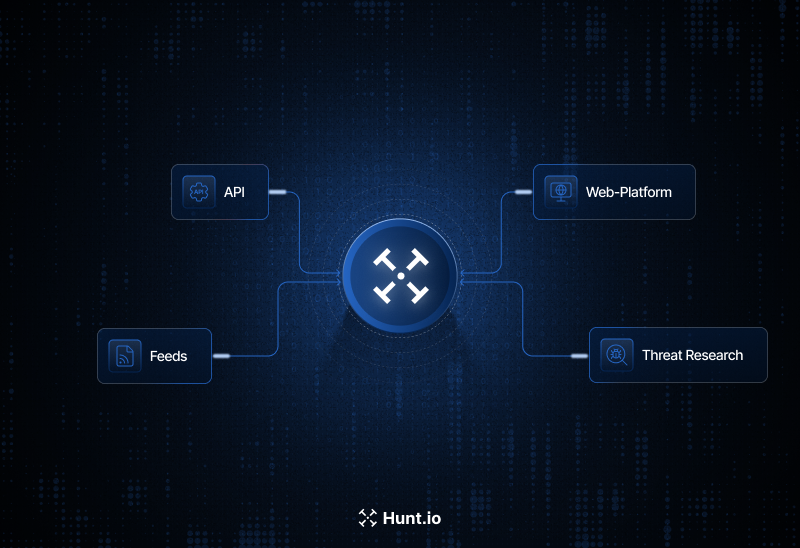
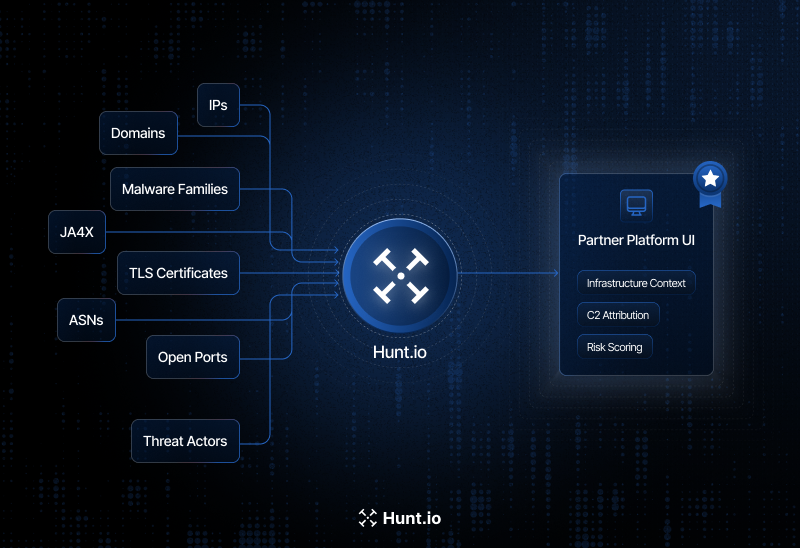
Spotlight on OEM Threat Intelligence Integrations
OEM partnerships have long been part of how Hunt.io is deployed.
Security vendors use Hunt.io as an intelligence layer inside their own products. That requires stable APIs, predictable access to threat intelligence feeds, structured data, and clear integration paths.
The previous site did not communicate that clearly. The new one addresses that directly.
A More Deliberate Visual Direction
One of the most visible changes is the shift in color and layout. The previous version felt lighter and closer to a traditional SaaS experience. The new design is darker, more structured, and more intentional.
Hunt.io supports teams conducting complex investigations across large-scale infrastructure. The updated visual direction aligns with that reality. It reduces noise, increases contrast, and creates a more focused environment around the platform's core themes: infrastructure, depth, and operational clarity.
The goal wasn't to make it look edgier. It was to make it feel aligned with the type of work the platform supports.

A Platform That Feels as Sophisticated as It Is
As the platform matured, investigations became more efficient and more deliberate as they moved from one signal to another. Searches became faster. Filters became more precise. Context became easier to interpret at scale. Pivots across infrastructure became more fluid.
The new design supports that shift. It is more focused, more intentional, and aligned with the type of work teams do inside Hunt.io every day.
What Hasn't Changed
The mission remains the same: track malicious infrastructure and help teams investigate it more effectively.
This redesign does not change what Hunt.io does. It clarifies how we present it.
If you haven't explored the new Hunt.io yet, visit the site to see what's changed, or schedule a demo to walk through the platform in more detail.
PS: We're working on substantial improvements to both the platform and the investigation experience. The goal is to make infrastructure hunting across the internet more efficient for teams running large-scale investigations. Stay tuned.
We recently launched the new Hunt.io website, and today we're taking a moment to formally introduce it.
Over the past year, the platform evolved steadily through practical updates. Hunt 2.0 modernized the experience and improved performance. SSL analysis gained anomaly-focused flags. IOC Hunter expanded with a dedicated feed and clearer attribution context. IP Risk & Reputation views were introduced. AttackCapture™ and HuntSQL™ workflows became more streamlined, and URLx expanded to 10.6B URLs.
The platform became more cohesive, and OEM support became a more central part of how Hunt.io is used. The website needed to be a reflection of the platform.
This redesign is all about alignment.
Clearer Infrastructure Focus
Hunt.io has always focused on infrastructure, but that wasn't always obvious from our website.
Investigations rarely stop at a single IP or domain. They move across certificates, fingerprints, hosting providers, reused artifacts, and related infrastructure. Over time, the product improved in how it connects those pieces and enables analysts to pivot between them more efficiently.
The new website presents Hunt.io as a unified infrastructure intelligence platform rather than a collection of separate tools.
Spotlight on OEM Threat Intelligence Integrations
OEM partnerships have long been part of how Hunt.io is deployed.
Security vendors use Hunt.io as an intelligence layer inside their own products. That requires stable APIs, predictable access to threat intelligence feeds, structured data, and clear integration paths.
The previous site did not communicate that clearly. The new one addresses that directly.
A More Deliberate Visual Direction
One of the most visible changes is the shift in color and layout. The previous version felt lighter and closer to a traditional SaaS experience. The new design is darker, more structured, and more intentional.
Hunt.io supports teams conducting complex investigations across large-scale infrastructure. The updated visual direction aligns with that reality. It reduces noise, increases contrast, and creates a more focused environment around the platform's core themes: infrastructure, depth, and operational clarity.
The goal wasn't to make it look edgier. It was to make it feel aligned with the type of work the platform supports.
A Platform That Feels as Sophisticated as It Is
As the platform matured, investigations became more efficient and more deliberate as they moved from one signal to another. Searches became faster. Filters became more precise. Context became easier to interpret at scale. Pivots across infrastructure became more fluid.
The new design supports that shift. It is more focused, more intentional, and aligned with the type of work teams do inside Hunt.io every day.
What Hasn't Changed
The mission remains the same: track malicious infrastructure and help teams investigate it more effectively.
This redesign does not change what Hunt.io does. It clarifies how we present it.
If you haven't explored the new Hunt.io yet, visit the site to see what's changed, or schedule a demo to walk through the platform in more detail.
PS: We're working on substantial improvements to both the platform and the investigation experience. The goal is to make infrastructure hunting across the internet more efficient for teams running large-scale investigations. Stay tuned.
Related Posts
Related Posts
Related Posts


